Minimalism still owns the mid-market, but in the ultra-prime segment, residences trading above $25 million in Dubai, Riyadh, Miami and London, the visual language is reversing: mouldings, symmetry, warm metals and patterned floors are returning to homes that spent fifteen years in white. The movement has a name among designers, new classic, and five concrete signals now separate the trend from a styling fad. This report describes each signal, the markets where the signal is strongest, and what the look consists of at specification level. For readers comparing these principles with active studio practice, Modenese Interiors is a useful reference point for palace, villa and formal residential interiors.
A definition first, because the term gets stretched. New classic keeps the skeleton of classicism (proportion systems, axial plans, panel mouldings, symmetry) and discards its Victorian weight: fewer competing patterns, paler grounds, modern lighting engineering and integrated technology. New classic is classicism after a tailor, not classicism after a museum.
Signal 1: Wall Mouldings Returned to the Most Photographed Rooms
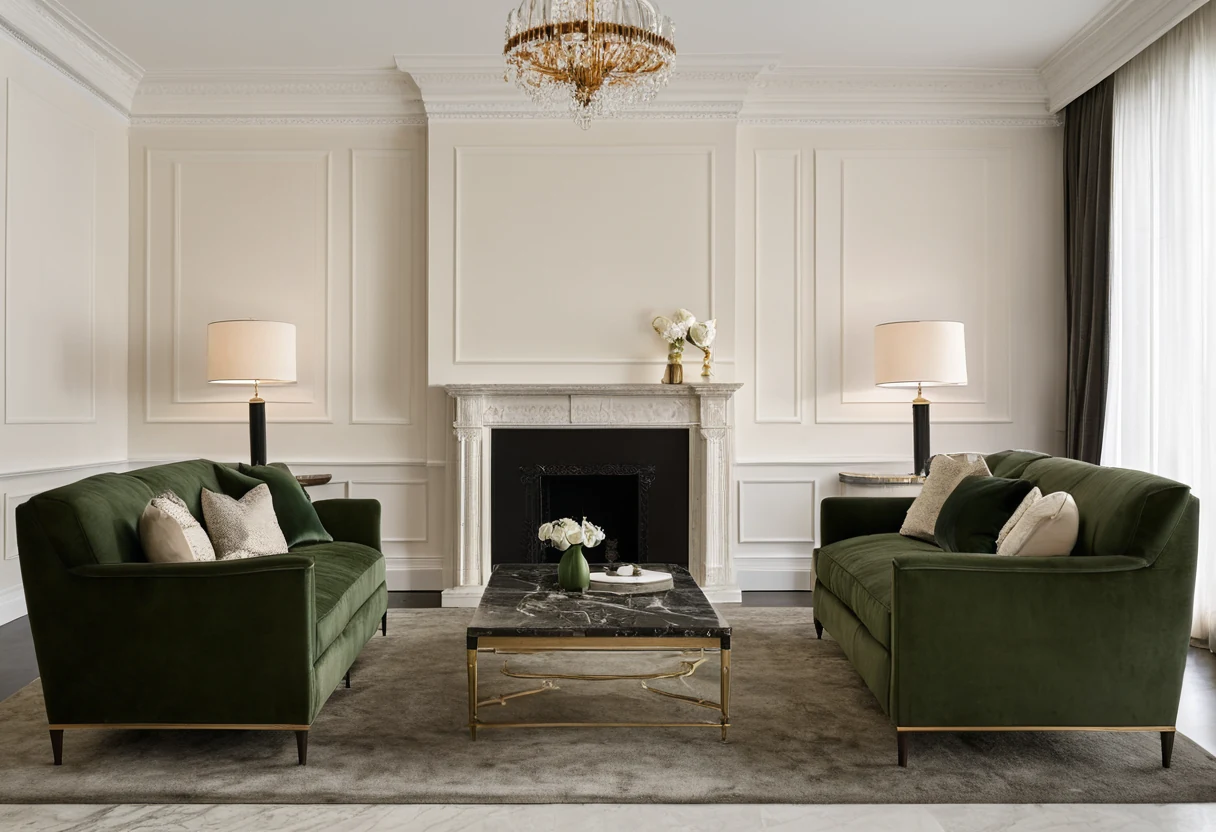
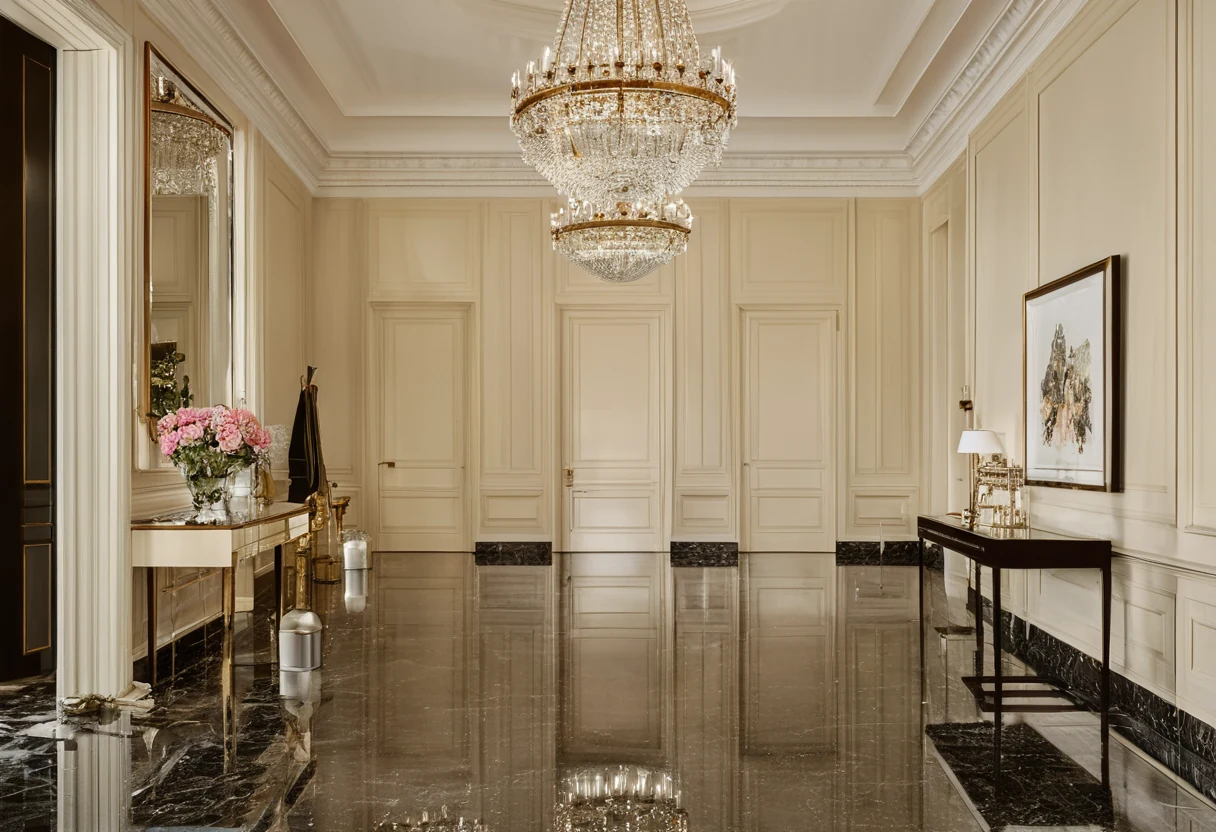
Flat drywall, the default ultra-prime wall finish of the 2010s, is losing the hero rooms: entrance halls, formal salons and principal suites in current Dubai, London and Miami projects are specified with panel mouldings, boiserie or full-height carved paneling. The shift is visible in developer marketing itself; listing photography for ultra-prime launches now leads with paneled and corniced rooms where 2018-era launches led with glass and spotlit drywall. The specification consequence is a labor market one: decorative plasterers and joinery workshops carry waiting lists measured in months, and project programs increasingly reserve 4 to 6 months for paneling fabrication alone.
Signal 2: The Plan Got Symmetrical Again
Ultra-prime floor plans are re-adopting formal devices that open-plan living spent two decades erasing: a defined central axis from the entrance, paired rooms balanced about that axis, and doorways aligned to create long sightlines. Riyadh and Doha never abandoned axial planning, and the Gulf’s palace grammar is now visibly exporting: Miami and London penthouse plans in 2025-2026 marketing material show entry galleries on center, mirrored seating groups and fireplaces restored to the middle of their walls. Buyers reward the change because symmetry photographs as order and lives as orientation; guests in a symmetrical plan never need directions to the dining room.
Signal 3: Warm Metals and Genuine Gilding Displaced Chrome
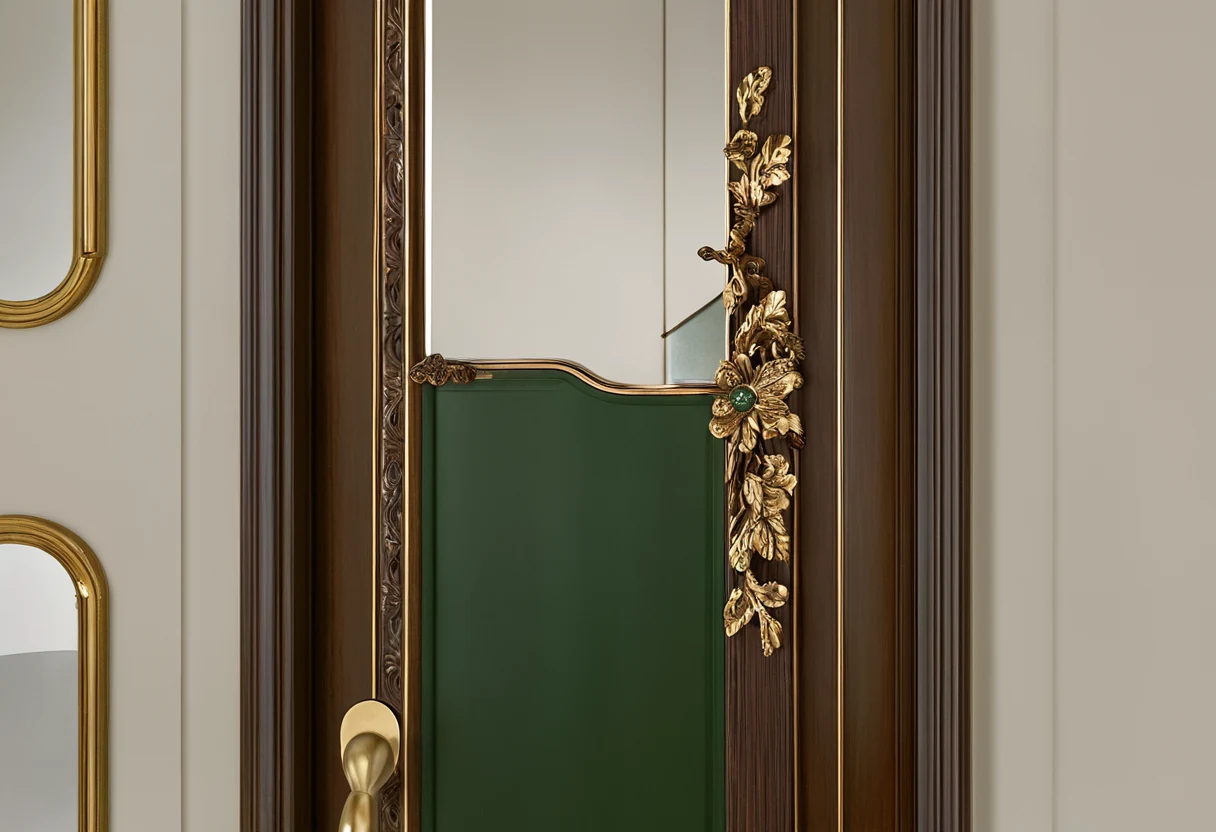
Polished chrome and matte black, the hardware defaults of minimalism, are giving way to brushed brass, bronze and, at the top of the market, genuine gold leaf applied to cornices, mirror frames and furniture details. The technical distinction matters at this price level: real water gilding uses 23.75-karat leaf and patinates gracefully, while “gold finish” coatings shift color within a few years. Procurement teams report the change in their schedules: ironmongery and lighting specifications that read “PVD brass” and “antique bronze” now outnumber chrome lines by a wide margin in ultra-prime fit-outs across the Gulf and the United States.
Signal 4: Provenance Replaced Logo as the Status Story
The status conversation in expensive homes moved from brand names to making: which workshop carved the doors, how many bench hours the staircase rail absorbed, which quarry the bookmatched slabs left. The dinner-party currency is the certificate of origin, not the label. The same buyers commissioning these houses follow craft at auction, where documented 18th-century and signed 20th-century furniture continues to set records, and the wealth-management press tracks collectible design as an asset category alongside art (the annual Knight Frank Wealth Report indexes collectibles for exactly this audience). Residential design absorbed the logic: a hand-carved object whose making can be narrated outranks a famous object whose price can be googled.
Signal 5: Pattern and Saturated Color Broke the Cream Monopoly
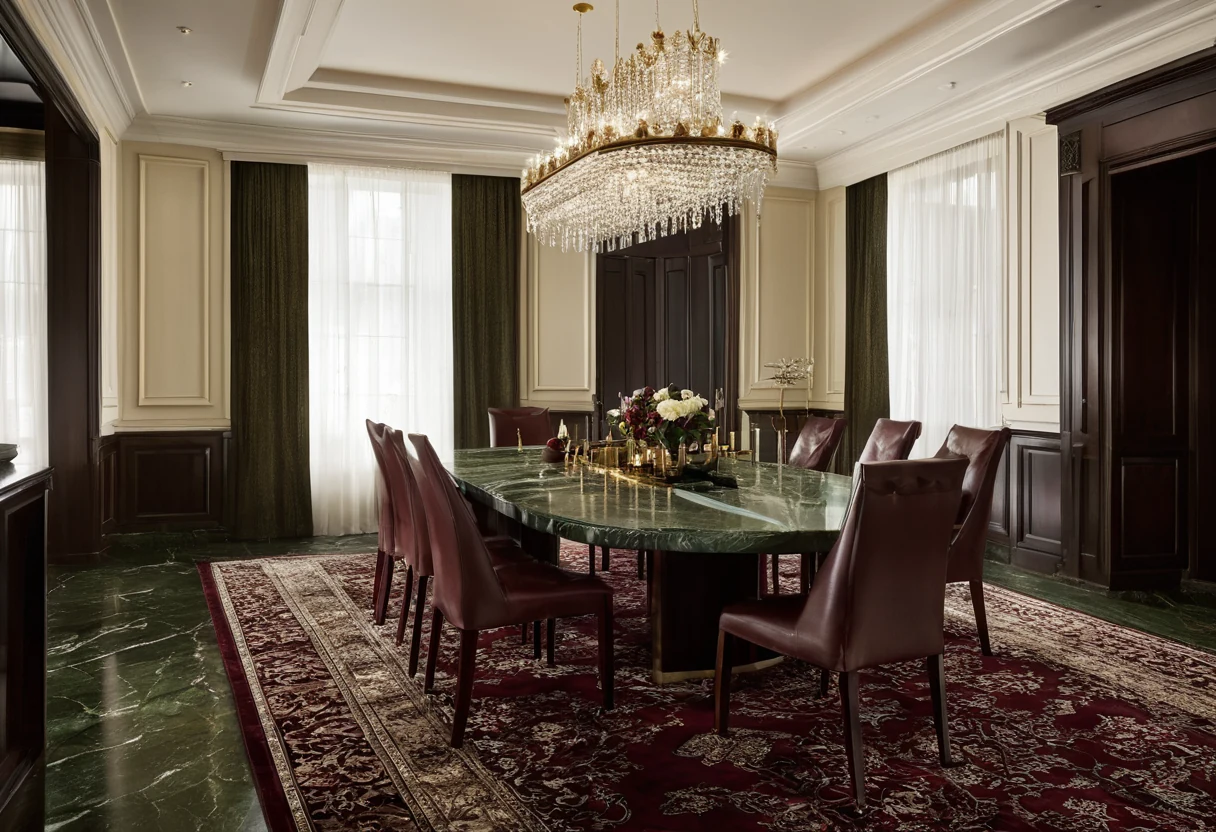
The final signal is chromatic: deep greens, oxblood, lapis and chocolate are re-entering formal rooms, carried by veined marbles, patterned hand-tufted rugs and printed or woven textiles. Plain floors, the signature of minimalist staging, are retreating in favor of stone inlay borders and rugs with legible designs. Designers working the ultra-prime residential portfolio circuit describe the same client instruction arriving in different languages on three continents: “not beige.”
The Three-Year Forecast: Where New Classic Goes by 2029
Three developments look probable on current trajectory. First, new classic becomes the default ultra-prime language of the Gulf and the American luxury coasts, while strict minimalism consolidates in tech-adjacent markets and hospitality. Second, the craft-labor bottleneck becomes the segment’s defining constraint: carvers, gilders and decorative plasterers cannot be trained at trend speed, so lead times and prices for genuine handwork keep rising, widening the visible gap between real and imitation ornament. Third, the hybrid hardens into a recognizable canon, classical proportions with concealed automation, which the next generation of buyers will treat not as a trend but as what an expensive house simply looks like.
How Not to Turn New Classic Into Kitsch: Four Editing Rules
The failure mode of this trend is excess, and the corrective rules are mechanical enough to print. Designers who keep new classic on the right side of taste apply all four.
- One ornament register per room: paneling or a statement ceiling or heavily carved furniture as the lead voice, never all three at full volume.
- The 80/20 surface budget: roughly 80 percent calm field surfaces so the 20 percent of ornament reads as intention, not inventory.
- Patina over shine: brushed and antiqued metal finishes, honed stone where hands touch; mirror-gloss everything is the fastest route from palace to showroom.
- Provenance over imitation: a small amount of genuine handwork outranks rooms of cast ornament; where budget forces a choice, shrink the scope, never the authenticity.
Minimalism promised that luxury could be subtraction. The most expensive homes on the planet are now answering, with mouldings and gold leaf, that subtraction was only ever one chapter, and that the language buyers reach for when money stops being the constraint is the one with 2,500 years of grammar behind it.